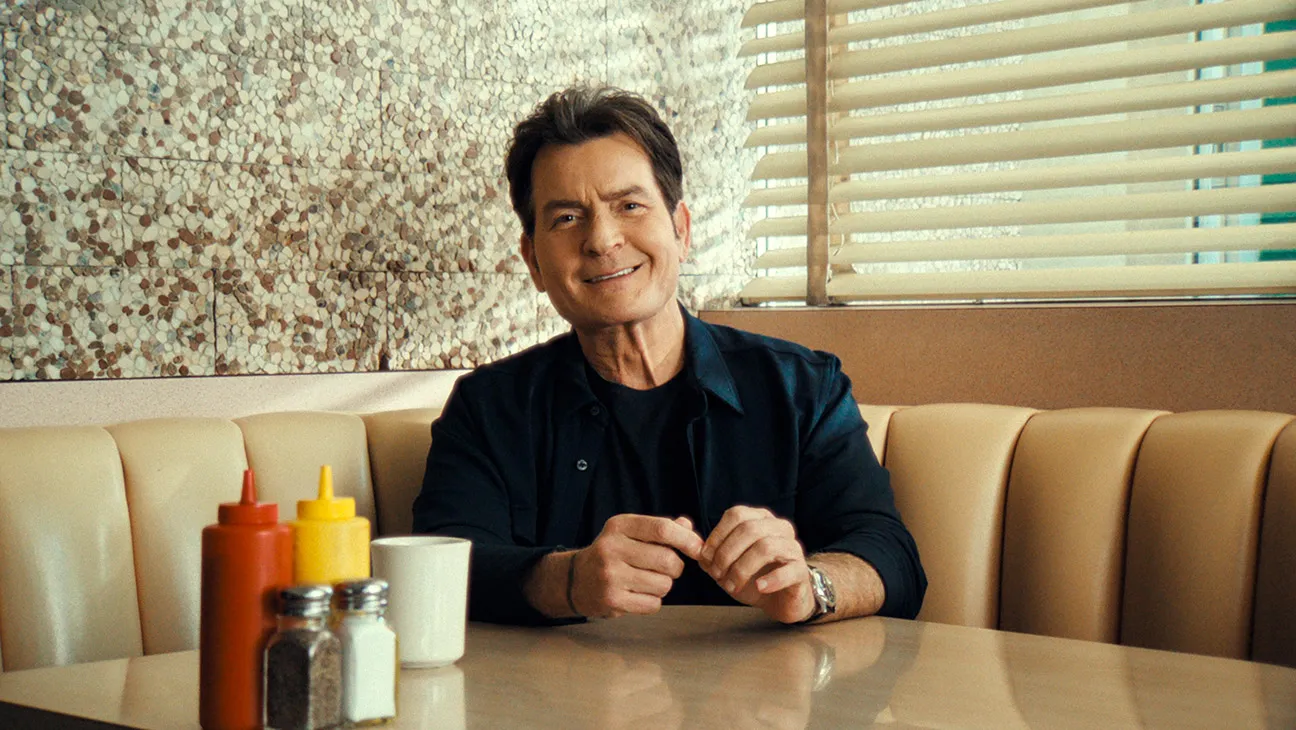
Charlie Sheen says the conversation itself is proof of how much his life has changed. Had he not gotten sober, he suggests, he would not even be able to sit for a serious interview about his past.
The actor, known for Platoon, Wall Street, Spin City and Two and a Half Men, recently spoke with The Hollywood Reporter about his Netflix documentary aka Charlie Sheen. He was joined by the film’s director, Andrew Renzi, and discussed not only the documentary’s creation but also how he and his father, Martin Sheen, responded to the finished film. Charlie has called the project a kind of love letter to his dad.
In the documentary, Sheen revisits his early years, his rise in Hollywood and the chaos that followed with unusual openness. Now sober, he speaks plainly about addiction, his HIV diagnosis and his sexual experiences with men. For someone whose real life often sounded more extreme than tabloid exaggeration, the challenge was not finding dramatic material — it was deciding what could fit.
Renzi says part of his task was separating fact from myth in a life that often felt unreal. He relied on a large archive of old footage, including Super 8 home movies from Sheen’s childhood. Those clips feature his brother Emilio Estevez, along with family friends Sean Penn and Chris Penn, and helped ground the story in a more personal history.
Still, Renzi says Sheen’s own memory became one of the film’s most valuable tools. He was struck by how clearly Sheen could recall events, even after years of substance abuse and public turmoil. Sheen himself admits it is surprising that so many memories remain accessible.
The final documentary runs 181 minutes and is divided into two parts. The first section looks at Sheen’s youth in Malibu, his early success as an actor and his connection to the Heidi Fleiss scandal. The second half, titled Part Deux in reference to Hot Shots! Part Deux, follows his cycles through rehab, sitcom success and personal crisis, including the moment he learned he was HIV-positive.
Renzi says there was enough material for a very different film, one that could have spent far more time on Sheen’s childhood and young adulthood, especially the Super 8 footage from the 1970s and 1980s. He was particularly drawn to the material involving Chris Penn. But because Sheen’s later life became so complicated and widely discussed, the filmmakers had to find a balance.
During the interview, Sheen remains candid but occasionally pushes back. He is not eager to answer repeated questions about his health, saying his presence should speak for itself. He also resists questions about money, making it clear that he considers some topics too personal.
His first meeting with Renzi, however, left him comfortable enough to move forward. Sheen says he had been approached before about documentary projects, but those pitches felt wrong to him. Some never went beyond phone calls or written outlines, and none captured what he wanted.
Renzi, he says, seemed different. Sheen felt the director was not interested in exploiting the tabloid version of his life. Instead, he believed Renzi wanted to acknowledge the wild and difficult chapters honestly while also recognizing the meaningful and creative parts of his story.
The documentary arrived alongside Sheen’s memoir, The Book of Sheen, published by Gallery Books, an imprint of Simon & Schuster. Released one day before the Netflix film’s Sept. 10 premiere, the book covers similar territory, including his long struggle with drugs and the infamous “Tiger Blood” period that began as a spectacle before turning darker. The close timing of the two projects was intentional, though it also created extra pressure around Sheen’s public return.